Case Study · 2026 Cottbus, Germany

Clay Oven
by Sharma

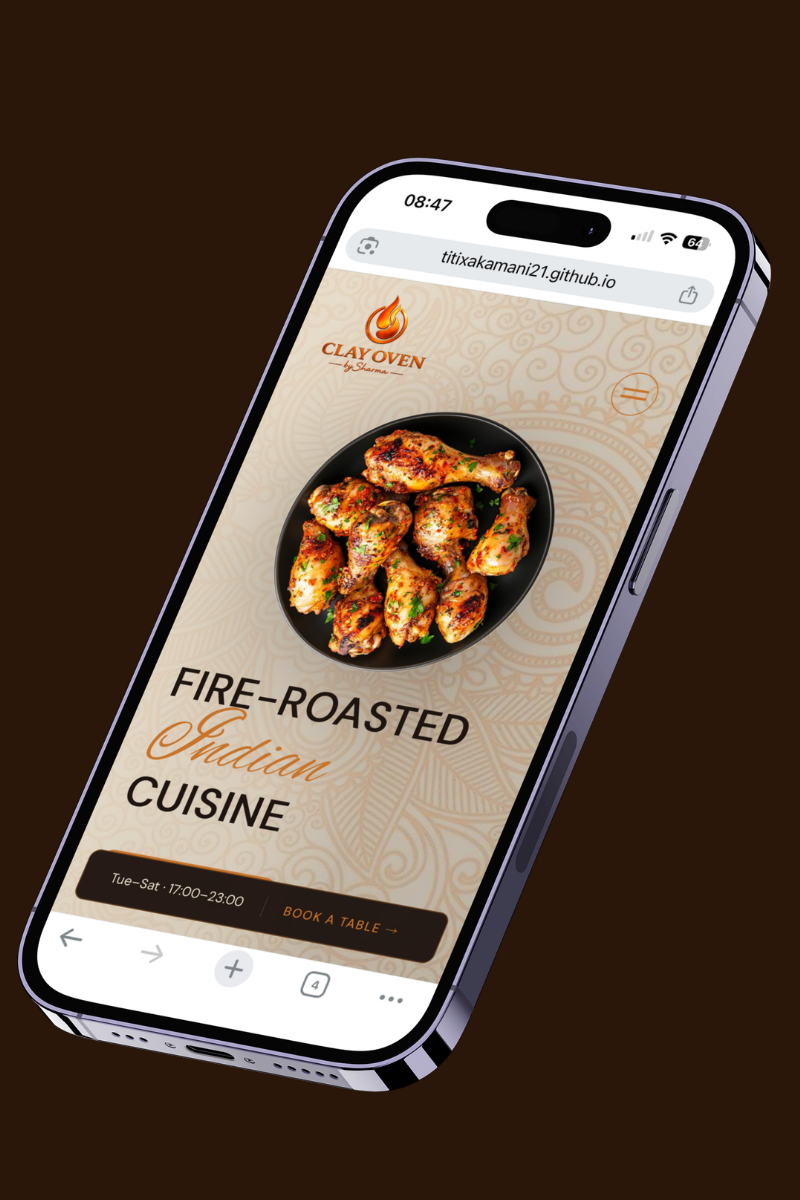
A restaurant website designed for two audiences at once, German and Indian. Bringing both cultures together and balancing impressions.

UI/UX Design Frontend Dev Brand Direction Cultural Strategy
View Live Site ↗
Clay Oven website mockup
Client
Clay Oven
by Sharma
Location
Cottbus,
Germany
Timeline
6 Weeks
2026
My Role
Design &
Development
The Challenge

Two audiences.
One website.

The client told me from day one that two completely different groups of people walk through the door. Indian families looking for familiar warmth and flavours they grew up with. German locals curious about something new, looking for trust and clarity before they commit to a reservation.

That is a real tension in design. What reads as warm and inviting to one audience can feel busy and unclear to the other. What feels clean and minimal to a German eye can feel cold and uninviting to an Indian one.

My job was to find the version of this site that works for both at the same time, without compromising either.

Indian Diaspora
Warmth, familiarity, script typography, rich colour. A site that feels like home before the food even arrives.
German Locals
Clarity, precision, trust signals, legal compliance. A site that answers every question before they pick up the phone.
titixakamani21.github.io/CLAY-OVEN

Indian warmth.
German precision.
One system.

Copper as the primary accent sits at exactly the right point between the two cultures. Rich enough to feel Indian. Refined enough to feel European. Cormorant Garamond as the display font carries editorial weight that reads as premium in both contexts.

The bilingual toggle was built into the HTML from the start, using data attributes on every element. Switching languages takes zero page reloads and keeps the user exactly where they are on the page.

Behind the Scenes

3 decisions that
shaped everything

01
Colour as a cultural bridge
Copper sits between two worlds. For an Indian eye it reads as warmth, spice, and celebration. For a German eye it reads as premium, considered, and refined. That one colour does a lot of heavy lifting across the whole site, and it was a deliberate choice made early.
Brand Direction
02
Bilingual in the HTML, not a plugin
Every piece of text has both languages sitting in the DOM via data attributes. One small JavaScript function reads a localStorage value and switches everything at once. Zero page reload, zero dependency on a translation service, and it scales to any language later without touching the HTML structure.
Technical Architecture
03
Three directions explored
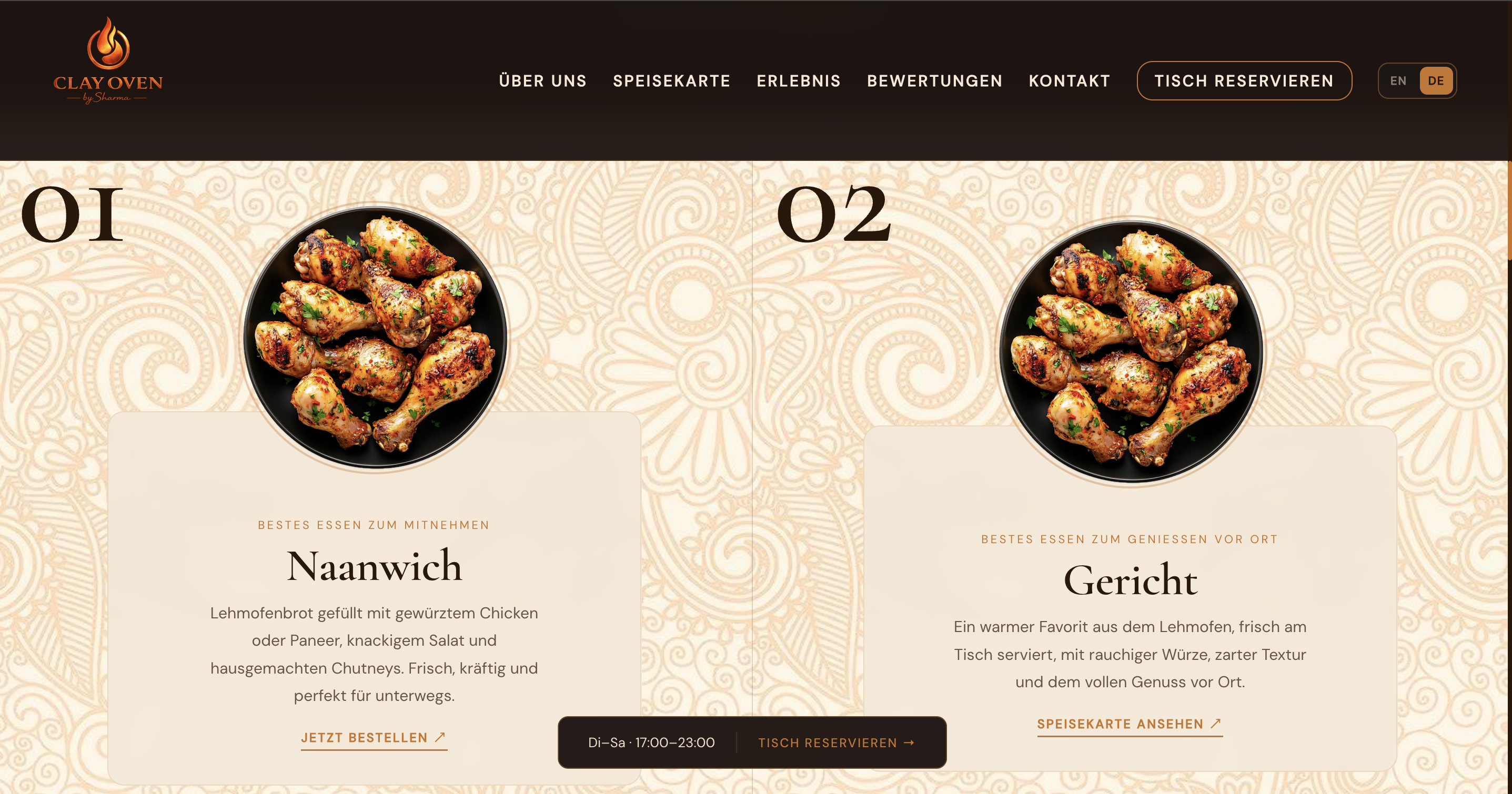
The dishes section went through three completely different layout directions before landing on what you see live. Dark split, tilted cards, full-bleed photos, and finally the editorial grid with ghost numbers and the food image overlapping the frosted card. The others were rejected for specific reasons, not preference.
Design Process
The Rejection Wall

Three directions explored.
Two rejected.

Here is every direction I explored for the dishes section and exactly why each one got cut.
Direction A
Dark cinematic split
The full dark background fought against the warmth the Indian audience needed. It looked great in isolation but broke the cultural balance we were trying to hold.
Direction C
Full-bleed photo panels
This needed high-resolution food photography to work. That was outside scope. Building a layout that depends on assets you do not control is a risk, so it was cut early.
Direction D
Direction D — Shipped
Editorial magazine grid
Ghost numbers, warm cream background, food image overlapping a frosted card. Works with the photography available, holds the cultural balance, and the frosted card solves the readability issue on the patterned background.
✓ Live on the site

Explore more in

What's Next
Analytics
Google Analytics integration is planned for post-launch. The priority right now is getting the site live and in front of real users.
Next Case Study
Soumya Glow